

Is My Baby Teething, or Just Drooling?
Share
Drooling on its own does not tell you that a tooth is about to appear. Look at the whole picture, including the gums, chewing and how your baby is feeding and behaving. A fever or a baby who seems ill should not be explained away as teething.
Parents often notice a wet neckline long before they see anything new in the mouth. Keep a spare top nearby while you watch for other changes.
What counts as a clue?
The NHS guide to teething symptoms describes sore or red gums, increased chewing and dribbling among possible signs. Timing varies: some babies start earlier or later than the familiar six-month estimate. The NHS also notes that there is no evidence teething causes diarrhea.
Use those clues as observations, not a diagnosis. If your baby has a high temperature, is feeding poorly or seems unusually sleepy or unwell, get medical advice. For a young infant in particular, do not wait for a tooth to appear before asking about concerning symptoms.
Deal with the damp clothes first
Keep a few clean cloths near the places your baby spends awake time. Gently dab dribble rather than repeatedly rubbing the chin. Change a wet bib or neckline, and ask for advice if the skin remains sore.
A bib can be useful while your baby is awake and supervised; remove it for sleep. Put used bibs with laundry, away from the clean stack. If a damp bib keeps ending up in a pocket or on the back of a chair, give used ones a more obvious place to go.
Washcloths from a hooded towel and washcloth set can be part of the ordinary cleanup supply. Choose them for their practical format, with no expectation that a textile will treat teething discomfort or a skin condition.
Choose a teether deliberately
Check the intended age, condition and care instructions of any teether. Use a purpose-made item rather than a household object with pieces that could loosen. The NHS advice on helping a teething baby explains that some teething rings may be chilled according to their instructions, but should not be frozen. Never tie one around a baby's neck.
There is no need to fill a drawer with options before you know what your baby accepts. Start with an appropriate item, stay nearby and check it regularly for wear. Ask a pharmacist or clinician about persistent discomfort rather than experimenting with remedies or medication doses.
Where a food feeder belongs
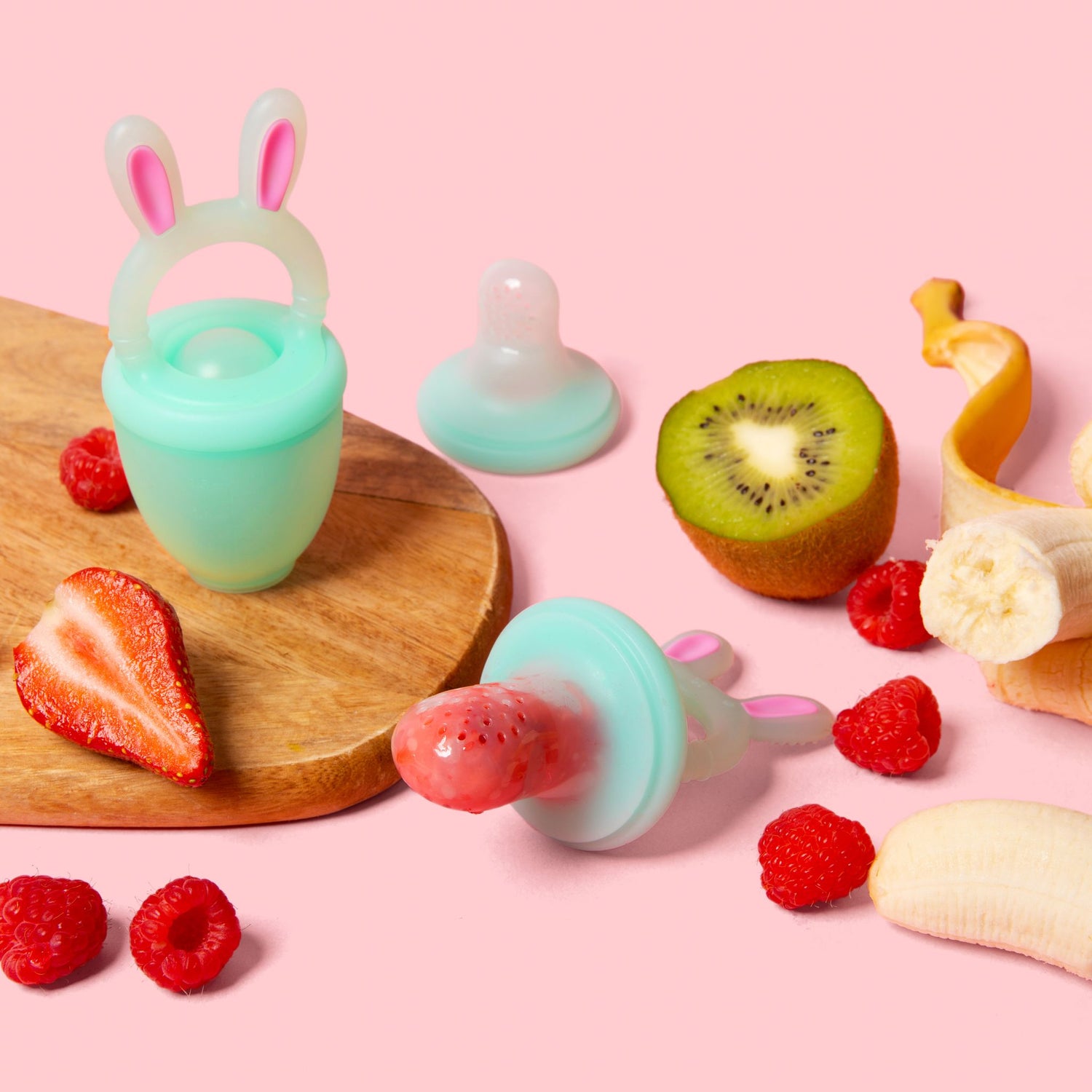
A fruit feeder is for a baby who is ready for complementary foods, not a shortcut for a drooling newborn. Vesta Baby's silicone fruit food feeder set belongs to that later feeding conversation. Read the product instructions and assess readiness with your care team when needed; drool is not a readiness test.
Our guide to starting solids and fruit feeders explains the distinction. A feeder also does not remove the need for supervision or appropriate food preparation.
| Observation | What to do with it |
|---|---|
| More dribble, otherwise comfortable | Manage the damp clothes and watch the overall pattern |
| Chewing and a tender-looking gum | Consider an appropriate teether and follow its instructions |
| Persistent sore skin | Ask about a suitable skin-care approach |
| Fever, poor feeding or unusual illness | Seek medical advice rather than blaming teething |
Questions parents ask
Does drooling mean solids should start?
No. Starting foods depends on developmental readiness and age guidance, not how many bibs you use. Milk remains the main food in early infancy.
Should I expect every tooth to be the same?
No. Keep track of what you observe without assuming a previous episode predicts the next one. If you are unsure whether a symptom belongs to teething, ask your baby's clinician.
Prepared by Vesta Baby. Sources checked October 9, 2026. General care information; persistent discomfort or illness needs individual advice.