

Starting Solids: Where a Baby Fruit Feeder Fits
Share
A baby fruit feeder holds prepared food inside a pouch with small openings, so your baby can try a taste while holding the handle. It can be an optional part of starting solids once your baby is ready. The first decisions are when to begin, how to prepare the food, and where your baby will sit while eating.
Start with your baby's readiness
The CDC's guidance on starting solids recommends beginning at about 6 months. Signs of readiness include sitting with or without support, steady head and neck control, opening the mouth for food, and being able to swallow it. Introducing solids before 4 months is not recommended.
A feeding product's age label describes the product's intended age range. It cannot tell you whether your baby is ready to eat. If the packaging says 4 months and up, check readiness with your pediatrician rather than treating that label as a starting date. Ask for individual advice if your baby was premature or has feeding or swallowing difficulties.
Continue your baby's breast milk or infant formula feeds as you introduce food. Early solids complement those feeds.
What to put in a fruit feeder
Choose food that suits your baby's stage and the instructions for your particular feeder. Soft ripe banana or pear cooked until soft can be starting options when prepared appropriately. Wash produce, remove hard seeds and pits, and remove tough skins. The NHS food preparation guide explains how softening firm fruit changes its texture.
Use a small amount that allows the feeder to close properly. Do not pack it tightly or force the closure. Having a pouch around the food does not make hard or unsuitable foods appropriate for your baby.
When introducing a food for the first time, offer one ingredient so you can notice a reaction. Follow your pediatrician's advice on introducing allergens; a feeder does not prevent an allergic reaction. For babies with severe eczema or an egg allergy, the CDC advises discussing peanut introduction with a clinician first.
Do not add honey before 12 months, and skip added sugar. These CDC food recommendations apply to food inside a feeder too.
Keep other foods and textures in the routine
Fruit is one part of a varied diet. Once solids begin, include appropriately prepared foods containing iron, such as iron-fortified infant cereal, meat, beans or lentils. Offer these as part of meals in a texture your baby can manage; fruit alone does not provide a complete diet.
Continue offering food in forms suited to your baby's abilities, including spoon-fed food and opportunities to handle suitable food as skills develop. The CDC recommends progressing through textures. Eating only through a pouch would leave out those different experiences.
Before each use
Set up a calm feeding space with your baby awake and seated upright in a suitable high chair. Stay close and watch throughout. The CDC's choking prevention advice includes avoiding food in a car or stroller and paying attention to everything a child puts in their mouth.
- Inspect the pouch, handle and closure. Stop using the feeder if a part is torn, loose or damaged.
- Fit the correct compatible pouch and close the feeder according to its instructions.
- Remove any protective cap before offering the feeder, and keep detached parts out of reach.
- Watch for signs your baby has had enough, such as turning away or closing their mouth, and stop offering food.
A fruit feeder cannot eliminate choking risk, so it still requires supervision and suitable food preparation. Ask your pediatrician about infant choking first aid so you know what to do in an emergency.
Clean it after the meal
Discard food left in the used pouch instead of saving it for later; the NHS advises throwing away half-eaten portions. Take the feeder apart as directed, wash all food-contact surfaces, and check the openings for trapped pulp. Follow the supplied instructions for washing, drying and any sterilizing method. Put it away clean and dry.
Choosing the Vesta Baby bunny feeder
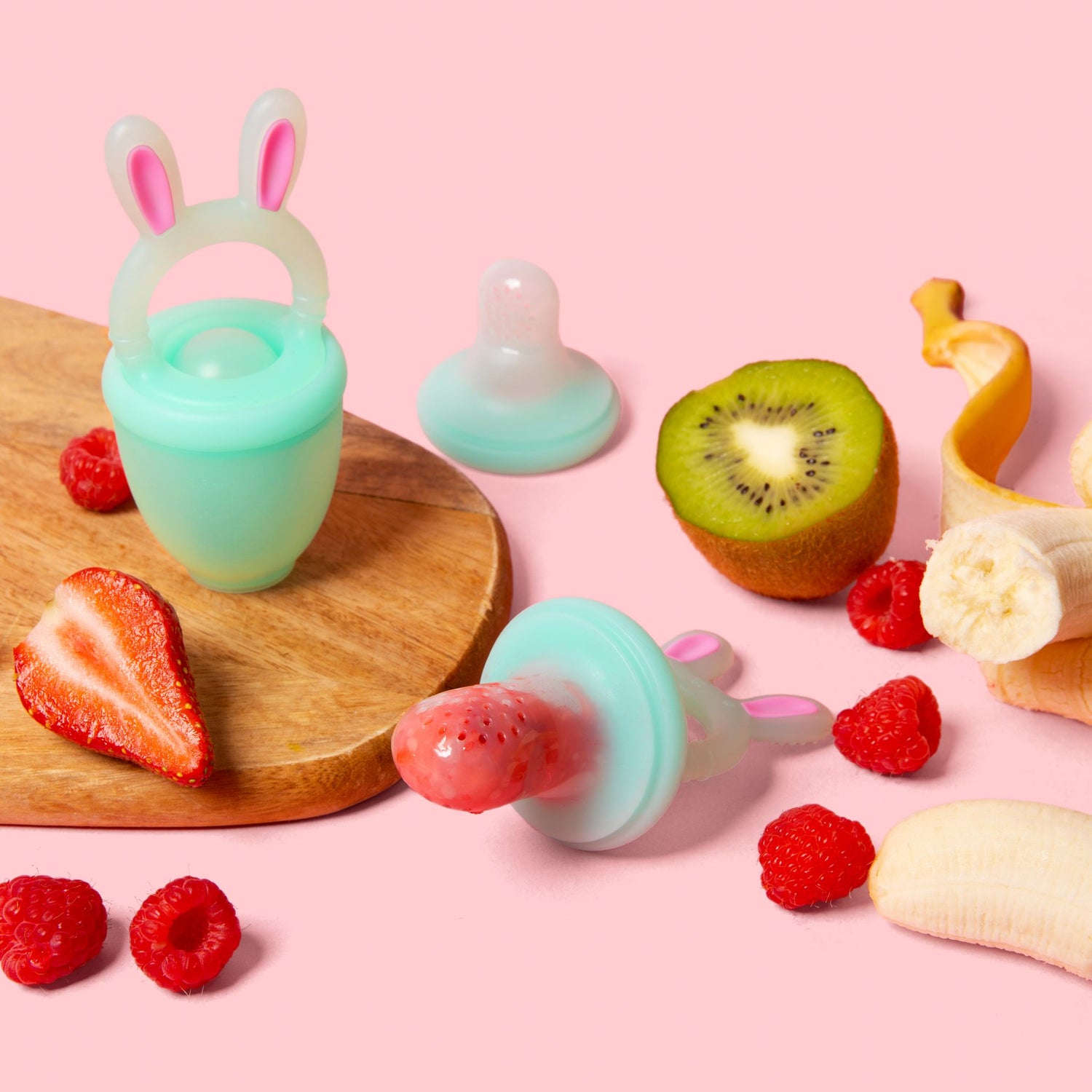
The Vesta Baby silicone fruit feeder set has a bunny-shaped handle, a protective cap and two sizes of interchangeable silicone pouches. Check the included sizes and assembly instructions before the first use, then choose the compatible pouch specified for your child's stage.
You can see the set and its parts on the product page, or browse our feeding collection when putting together your baby's mealtime supplies.
Do you need a feeder to start solids?
No. Families can introduce suitable foods without one. A feeder is an optional utensil; choose it if it fits the way you plan to offer food and you are comfortable assembling and cleaning it.
Can a fruit feeder replace a meal?
Use it for a small part of the eating experience. Keep breast milk or formula feeds and a variety of appropriate complementary foods in your baby's routine. Your pediatrician can help you judge how feeding is progressing.
Sources reviewed September 10, 2026. This guide provides general information; your child's clinician can advise on individual feeding needs. The cover shows the Vesta Baby product with fruit as a display, not serving-size or food-preparation instructions.